MSMEs and startups are always front and centre in Budget speeches, yet the real test of any Union Budget is not intent—but execution. With over 6.3 crore MSMEs contributing nearly 30% of GDP and India hosting the world’s third-largest startup ecosystem, Budget 2026–27 presents a chance to deliver operational relief that genuinely improves cash flow, compliance ease, and growth visibility.
Rather than headline-heavy schemes, this Budget will be meaningful only if it addresses everyday friction: delayed payments, access to credit, regulatory overload, and tax uncertainty.
Current Reality Check
What has improved
- Wider access to digital lending and government-backed credit schemes
- Startup India recognition benefits and selective tax incentives
- Emergency credit support during economic stress
What still hurts
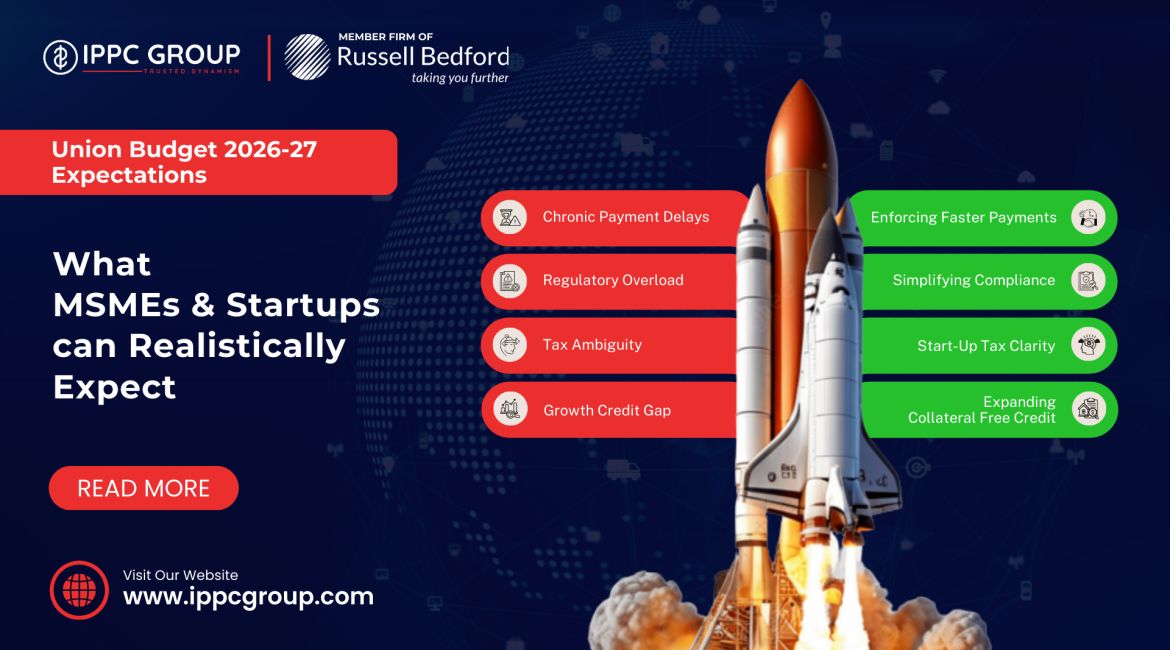
- Chronic payment delays by large buyers
- Limited non-metro access to equity capital
- High compliance burden for small businesses
- Tax ambiguity on angel funding, ESOPs, and valuations
Budget 2026–27 must focus on fixing these gaps, not creating new layers.
Top MSME Expectations: Practical, Not Promotional
1. Enforcing Faster Payment Cycles
Despite statutory 45-day payment limits under the MSME Act, many small businesses face 90–120 day receivable cycles, choking working capital.
Expected direction:
- Mandatory disclosure of MSME payment timelines by large companies
- Incentives for timely payments and penalties for chronic defaulters
- Wider compulsory adoption of TReDS for invoice discounting
Why it matters:
Reducing payment cycles from 90 to 45 days is equivalent to a working-capital infusion without borrowing, unlocking liquidity across the MSME ecosystem.
2. Expansion of Collateral-Free Credit
Schemes like MUDRA and CGTMSE exist, but growth-stage MSMEs needing ₹20–50 lakh still struggle.
Likely Budget focus:
- Higher MUDRA limits for compliant borrowers
- CGTMSE recapitalisation to expand guarantee coverage
- Faster, time-bound approvals for small-ticket loans
Impact:
Easier access to growth capital without risking personal assets encourages expansion, hiring, and innovation.
3. Compliance Simplification for Small Businesses
Multiple returns, portals, and inspections drain management bandwidth.
Expected relief:
- Consolidated or simplified compliance for micro enterprises
- Greater use of pre-filled returns using existing government data
- Leniency for first-time procedural lapses
Result:
Lower compliance anxiety, higher formalisation, and reduced litigation for genuine businesses.
4. Presumptive Taxation for Digital & Platform Businesses
E-commerce sellers and gig-economy MSMEs face complexity around turnover reporting, TCS, and audits.
Possible reform:
- Presumptive taxation option for platform-based MSMEs up to a defined turnover
- Simplified income computation with reduced audit requirements
Benefit:
Founders spend time growing the business—not reconciling statements and notices.
5. Capital Gains Relief for MSME Reinvestment
Immediate capital gains tax on sale of business assets restricts reinvestment.
Expected measure:
- Tax deferral if gains are reinvested into another MSME or startup within a specified period
Why this helps:
Encourages capital recycling and repeat entrepreneurship within the MSME ecosystem.
Startup-Specific Expectations
1. Angel Tax: Final Resolution
Angel tax continues to deter early-stage funding due to valuation subjectivity.
Expectation:
- Complete removal or strong safe-harbour protection for Startup India–recognised entities
Impact:
Improved confidence for angels and smoother early-stage fundraising.
2. ESOP Taxation Reform
Current taxation at exercise—before liquidity—discourages equity-based compensation.
Expected reform:
- Tax ESOPs only at the time of sale, not exercise
Who benefits:
Startup employees who trade higher salaries for long-term equity upside.
3. Longer Loss Carryforward
Many startups take longer to turn profitable, especially in deep-tech and R&D-heavy sectors.
Likely ask:
- Extended loss carryforward period for recognised startups
Outcome:
Supports long-gestation innovation and patient capital.
Cross-Cutting Growth Enablers
- Digital MSME Infrastructure: Better integration of GST, banking, and credit data for faster lending and compliance
- Export Support: Faster GST refunds, easier export financing, and market access incentives
- Green Manufacturing Incentives: Subsidies and tax benefits for sustainable upgrades
What MSMEs & Startups Should Do Now
- Clean up compliance and filings
- Track payment delays and credit eligibility
- Prepare funding, ESOP, and restructuring plans for quick post-Budget action
The Real Test of Budget 2026–27
This Budget should be judged on one question:
Does it reduce friction—or add another scheme?
MSMEs and startups don’t need more announcements. They need:
- Faster payments
- Easier compliance
- Predictable taxation
- Accessible credit
If business becomes easier on 2 February 2026 than it was on 31 January 2026, the Budget will have done its job.
Our Take & Way Forward
Union Budget 2026–27 will matter for MSMEs and startups only if it reduces day-to-day friction—whether in payments, compliance, taxation, or access to capital. Businesses that are compliance-ready and strategically prepared will be best positioned to benefit from any positive policy shifts.
At IPPC GROUP (I.P. Pasricha & Co), we work closely with MSMEs and startups to navigate tax planning, compliance optimisation, funding structures, and post-Budget implementation. If you would like to assess how upcoming Budget proposals may impact your business—or prepare for quick action post-announcement—our team would be happy to assist.
📩 Connect with us: sailfreely(Replace this parenthesis with the @ sign)capasricha.com
🌐 Visit: www.ippcgroup.com